

Editor note: this article has been updated with the new dates for compliance following the announcement of the deadline extension.
With ADA Title II compliance deadlines approaching—April 2027 for large, public entities and April 2028 for smaller ones—courts need to act now to make digital services accessible. Updated regulations require livestreams, recordings, and public-facing content to meet WCAG 2.1 AA standards, making accessibility a core part of participation in the justice system.
WCAG (Web Content Accessibility Guidelines) is a global accessibility standard from the W3C. Level AA builds on Level A, creating measurable standards for perceivable, operable, understandable, and robust digital content. Courts that follow WCAG 2.1 AA help ensure all participants can access and understand courtroom information.
These deadlines apply to livestreamed hearings, recordings, audio content, and public-facing websites or apps.
ADA Title II, Section 35.160 requires public entities to “take such steps as may be necessary to ensure that communications with applicants, participants, and members of the public with disabilities are as effective as communications with others.”
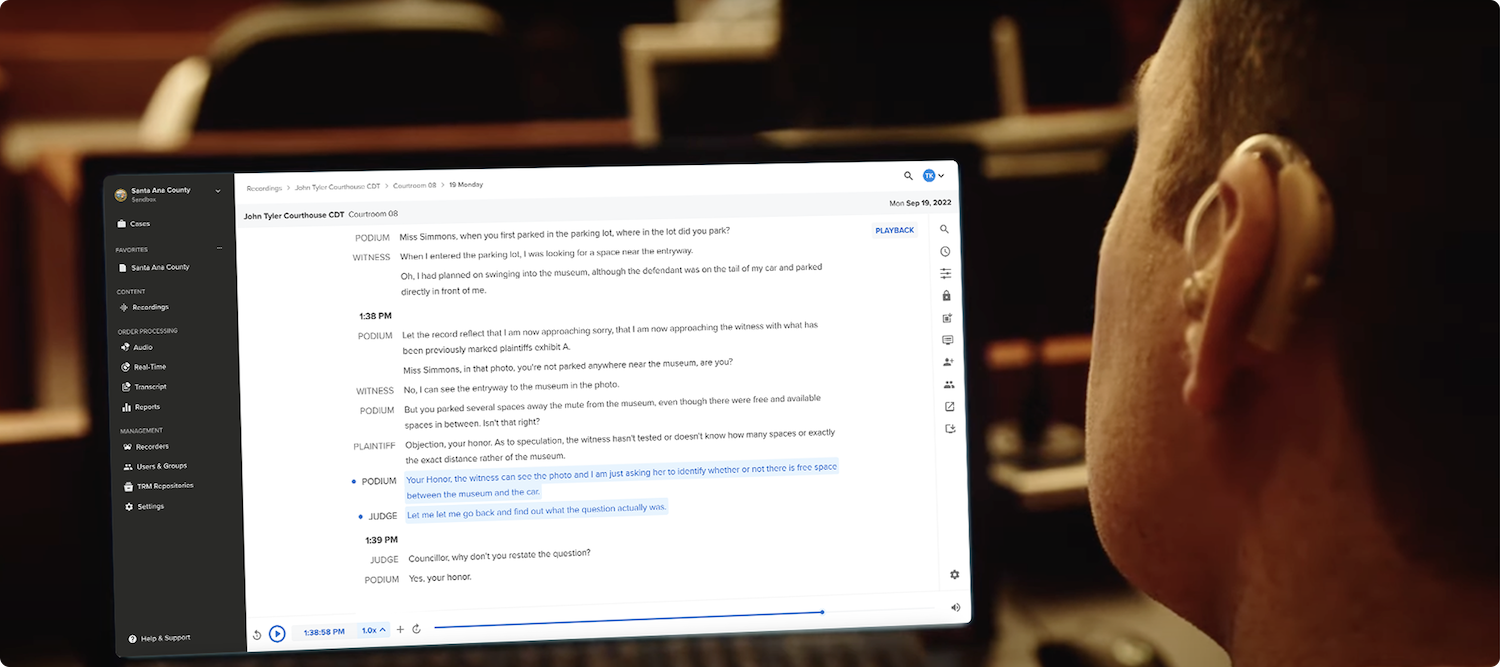
In courtrooms, this guidance supports real-time accessibility via synchronized audio and text.
ADA Title II Supplementary Information notes that “deference to the request of the individual with a disability is desirable… some courtrooms are now equipped for ‘computer-assisted transcripts,’ which allow virtually instantaneous transcripts of courtroom argument and testimony to appear on displays.”
Real-time speech-to-text solutions like FTR RealTime allow live speech-to-text feeds to be displayed across multiple courtroom screens or remotely, helping:
Accessibility is more than compliance—it ensures everyone can be heard, understood, and fully participate. Real-time speech-to-text solutions help ensure participants, observers, and staff can follow proceedings as they happen. When displayed across multiple courtroom screens, these live transcripts extend accessibility throughout the room, improving visibility and comprehension.
In court settings, where spoken communication is central to proceedings and the court record, these requirements shape how technology can support clear, inclusive access for all participants.
At For The Record, our critical goal is to create access with impact. To that end, FTR Justice Cloud is designed to WCAG 2.1 AA standards in partnership with real court users and accessibility advocates. From multi-language support to clear interfaces, accessibility is built into the design—not added later.
Courts that act now will be better prepared to meet compliance deadlines and create inclusive, participatory environments. Clear, visible, real-time courtroom information is critical for equitable justice.
For more information on ADA Title II digital accessibility requirements, visit: https://www.ada.gov/law-and-regs/regulations/title-ii-2010-regulations/#-35200-requirements-for-web-and-mobile-accessibility